What are the Signs of Muscle Dysmorphia in Men, and What Can One do About It?
Something I’ve noticed working in men’s mental health (and spending a fair amount of time in spaces where men talk openly about their bodies, fitness, and appearance) is a shift that started well before the pandemic but really accelerated during it. By now, most people have heard of looksmaxxing, or can at least infer what it means from the name. But that trend didn’t appear out of thin air. It’s rather the latest expression of something that’s been building for years and that I’ll talk about now: our growing obsession with how we men look, and specifically, with how much muscle we have.
The focus on muscle isn’t surprising to me. It makes sense given the culture we live in. And while I’ve seen other areas of concern come up with clients (wrist size, jawline, chin shape, the fat upper pubic area) muscle mass is by far the most common preoccupation I encounter.
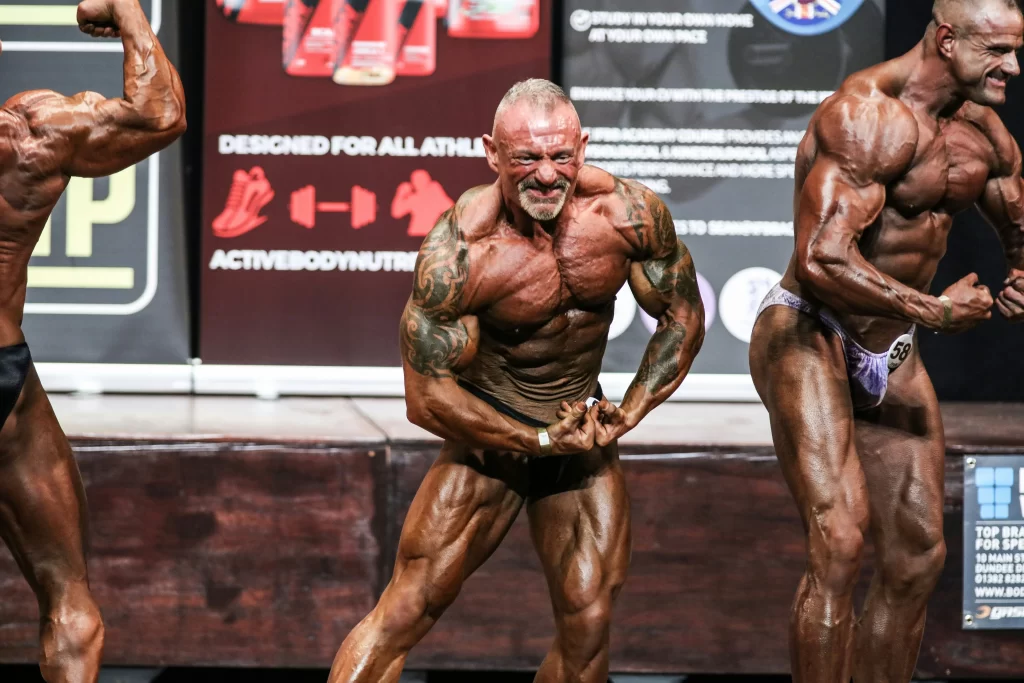
What did surprise me, years before the pandemic, was watching a documentary featuring several Mr. Olympia competitors. These are arguably the most muscular men on the planet. Phil Heath, seven-time champion, was among them. And not one of them (not a single one) felt they had enough muscle. They’d say it to the interviewer and then laugh it off, pivot quickly, move on. Like they didn’t want anyone looking too closely at what they’d just admitted.
I rememeber thinking “Whaaa? That’s crazy!”. It really stuck with me. If the most developed bodybuilders in the world don’t feel like enough, what does that leave for the rest of us mortals?
After that documentary, and even more so after the pandemic, I started looking more carefully at what’s actually going on. Most of what you find when you search for body image disorders points to anorexia and bulimia, which are the two most recognized eating disorders. There’s comparatively little about muscle dysmorphia, also called Bigorexia. So here’s what I found, what I’ve seen in clients, and where I think the line runs between normal concern about your body and something that’s become obsessive and harmful. Where it tends to come from, why the pandemic mattered, and what actually helps. Because I’ll be honest: for muscle dysmorphia that’s really taken hold, the most important thing someone can do is reach out to a specialist.
Signs You May Be Dealing With Muscle Dysmorphia
This isn’t a black-or-white diagnosis. It’s a spectrum, and the cutoff between someone who’s very concerned about their appearance and someone who’s crossed into dysmorphia territory isn’t always obvious, even to the person living it. What I’d ask you to do is be honest with yourself. The more of these signs are present in your life, and the stronger they feel, the more likely it is that something worth paying attention to is going on.
At its core, muscle dysmorphia involves being fixated on one or more specific parts of your body that don’t look the way you want them to, and then doing things to try to get them there. It could be your chest, your thighs, your biceps, your neck, or multiple areas at once. There’s something you see when you look in the mirror that feels wrong, and that feeling generates real discomfort (sometimes intense enough that you start avoiding mirrors altogether.)
The clearest way to gauge whether this has moved into dysmorphia territory is to look at two things: the internal impact it’s having on you, and the actions you take because of it. We’ll take each one in turn.

The Internal Impact
It’s not just about disliking a part of your body. What sets dysmorphia apart is the emotional weight attached to it.
If that part of your body not looking the way you want it to is costing you sleep, pulling your attention throughout the day, or producing a level of distress that feels disproportionate (similar to how you’d feel if something very serious happened in your life) that’s an important clue. If, on the other hand, you look at it and think “eh, could be better” and move on, you’re probably fine.
Beyond that baseline distress, look for the following:
- Anger, despair, anxiety, and relentless self-criticism. Not occasional frustration but a persistent, heavy emotional charge that follows you.
- Disappointment that doesn’t lift. Any progress short of “perfection” doesn’t make the feeling go away.
- Passive suicidal thoughts. Not necessarily wanting to die, but thoughts like I wish I wouldn’t wake up tomorrow, I wish I could just disappear, or a desire to go somewhere no one could find you. These are significant.
- Shame and a pervasive sense of not being enough. Not just about your body, but something that spreads to your whole persona.
- Emotional isolation. Not wanting to talk about any of this with others, because you’re convinced they won’t understand. And careful! Often that fear is confirmed. Many of the men I work with have tried to open up to friends or partners, only to be met with responses like “Huh? You’re already big enough” or “you’re just being vain“. Incredulity, minimization, invalidation, mockery. These kind of responses sting AND closes the door. It teaches the guy to keep things to himself.
- Envy. And not the mild kind. This tends to move between two extremes: intense admiration that borders on obsession (following someone religiously, wanting to be exactly what they are, following their advice to the T) and sudden, sharp resentment toward that same person, because their body is a constant reminder of what you feel you’re not. The shift between those two states can happen fast, and it’s exhausting.
The Behavioral Changes
The internal weight of muscle dysmorphia doesn’t stay internal for long. It starts shaping how you move through the world: what you do, what you avoid, and what disappears from your life.
- Social avoidance. This is a big one. People will go out of their way to escape or avoid situations where they feel exposed or where that perceived flaw is visible to others. And the mind has a way of making this worse: it’s easy to start assuming that strangers, or even people who know you well, are already noticing and judging you for the same reason you’re judging yourself. Whether or not that’s true (it usually isn’t) the association feels real and immediate.
- Avoidance of intimacy and sex. Physical closeness means physical exposure. For someone navigating muscle dysmorphia, that can make sexual intimacy feel too threatening. I’ve had people up and tell me they turn down sex because of this exact thing. The same logic applies to something as routine as a medical checkup, being seen by a doctor, undressed or examined, can trigger the same discomfort. It’s not strange for porn addiction to become prominent here.
- Extreme and often unsafe dietary behavior. This goes well beyond eating clean. It means cycling through diets sourced not from qualified professionals but from someone they look up to online, or something they stumbled across randomly. It means taking supplements, pills, or other substances without a prescription in order to accelerate the changes they’re looking for.
- Social withdrawal through food avoidance. If a birthday dinner, a work event, or a night out involves food or drinks that don’t fit the plan, the easier choice becomes not going. Over time, that means missed celebrations, absent friendships, and a social circle that starts shrinking. And remember, social isolation is a huge risk factor for most mental disorders.
- Exercise as the organizing principle of the day. Gym time stops being one activity among many and becomes the central one, competing with and often winning against work, study, rest, and other responsibilities. It turns from hobby or leisure time into necessity, urgency, and the only respite from the anxiety and shame that’s constantly around.
- Compulsive body-checking. Mirrors, reflections in shop windows, phone cameras, different angles, different lighting, there’s a constant, almost OCD-like monitoring of how that perceived flaw looks at any given moment. It’s not vanity. It’s vigilance.
- Concealment and camouflage. Hats, specific cuts of clothing, layers, or conversely, very tight clothing that emphasizes muscle: whatever gets that perceived flaw closer to invisible, or makes the gains look bigger than they feel. The goal is the same: control how much others (and even yourself) can see, and close the gap between what’s there and what should be there.
Why Does This Happen?
Most articles on muscle dysmorphia will point to the usual combination of factors, without getting into too much detail: genetic predisposition, social pressure, social media consumption, past trauma, and so on. And those things are real. But I want to go deeper than that.
What I’ve come to believe, both from the research and from working with the men who come to me with this, is that the underlying process is usually the same regardless of what triggered it.
At some point (for whatever reason) the mind forms an association between a feeling of rejection or unworthiness and the body, or a specific part of it. Kinda like how we associate certain music bands with ex-partners or smells with family memories. That association gets locked in. And because the person hasn’t developed the internal capacity to sit with feelings, examine them, and work through them on their own, the mind can only see the surface: this part of my body makes me feel this way. When it looks the way I want it to, I’ll stop feeling this way. This is another consequence of forcing boys not to express themselves, keep everything inside and always look strong. Lots of skills go untrained, and the person has a lack of ability to navigate difficult situations, just like a carpenter with an almost empty toolbox.
That’s the mechanism. It’s emotional avoidance (driven by an inability to face and defuse an uncomfortable internal experience) redirected onto the body as a problem to be solved.
You can see this clearly in men who were relentlessly bullied about their weight or their physique growing up. The rejection attached itself to something visible and concrete.
The pandemic accelerated this in a way that’s hard to overstate. We were all anxious. We were all, at different points, feeling hopeless due to not knowing when or whether things would return to normal. And the people who struggled most during that time were those without strong internal tools for managing their own emotional world. Without them, the mind will attach that free-floating anxiety to something. For some people it was social interaction (“what if I get infected?“) leading to a surge in social anxiety during and after. For others, it was their own body, which happened to be the one thing they were staring at, day in and day out, while locked at home.
Add to that the role social media played during that period. For a lot of people it was a lifeline, a way to stay connected and distract themselves from how bad things felt. But that distraction came at a cost. Enough hours in certain corners of fitness and physique content, and what starts is a slow and unconscious association between emotional distress and a particular body image that gets reinforced, deepened, and normalized. The connection between how I feel and how I look becomes harder and harder to see past.
That, in my view, is what sits at the root of this.
What Actually Helps
My goal with this article is twofold.
First, to put language to something that a lot of men are living with but don’t have words for. To make clear that this is common, that it’s serious, and that it has nothing to do with vanity or anything like that. Muscle dysmorphia affects how you sleep, how you relate to people, how you see yourself. It deserves to be taken seriously.
Second, to start giving you some answers. Not just what this is, but why: why your body, why now, why it won’t seem to let up no matter what progress you make.
If emotional avoidance sits at the root of this (and I believe it does) then the path forward involves building the very skill that’s been missing: the capacity to face discomfort without needing to immediately escape it or fix it. That’s not an easy fix, but it’s a learnable thing.
Clinically, body dysmorphia and its variants fall under the OCD spectrum in the DSM-5, the diagnostic manual used by us psychologists and psychiatrists as the gold standard. And the gold standard treatment for OCD-spectrum conditions is Exposure and Response Prevention therapy, or ERP. The idea is straightforward, even if the practice takes work: you gradually expose yourself to the thing that triggers discomfort, and you learn to tolerate it (to stay with it) without acting on the urge to escape or neutralize it. This is very different from white-knuckling your way through pain. That doesn’t work. Instead, it’s about building specific skills to face something without resisting, and come out the other side.
Anything that helps you become more at ease with sitting in discomfort (more capable of facing internal adversity without flinching) will move the needle here.
I have an exercise I use with clients that I call chewing your emotions. It’s designed to give you a sense of agency over what you’re feeling, to basically help your body actually process emotion rather than suppress it or redirect it outward. It’s a good place to start.
But if this is already significantly present in your life (if you recognize yourself in several of the signs above, and they’re showing up with some intensity) the most efficient thing you can do is reach out to a specialist. Think about it this way: when you want to get bigger, you don’t just go to train and do whatever catches your eye. You look for coaches, programs, people who know what they’re doing. You look for quality information and THEN you put in the work. Building stronger mental muscles is no different. Find a therapist or psychologist who works with men and understands this, get good information, and start putting in the work. You don’t have time to reinvent the wheel, so don’t try to.
If you don’t know where to start, I’m here.